
Home » Cashless Payments Knowledge Hub » What to Do Next When a Money Transfer Fails: A Complete Guide
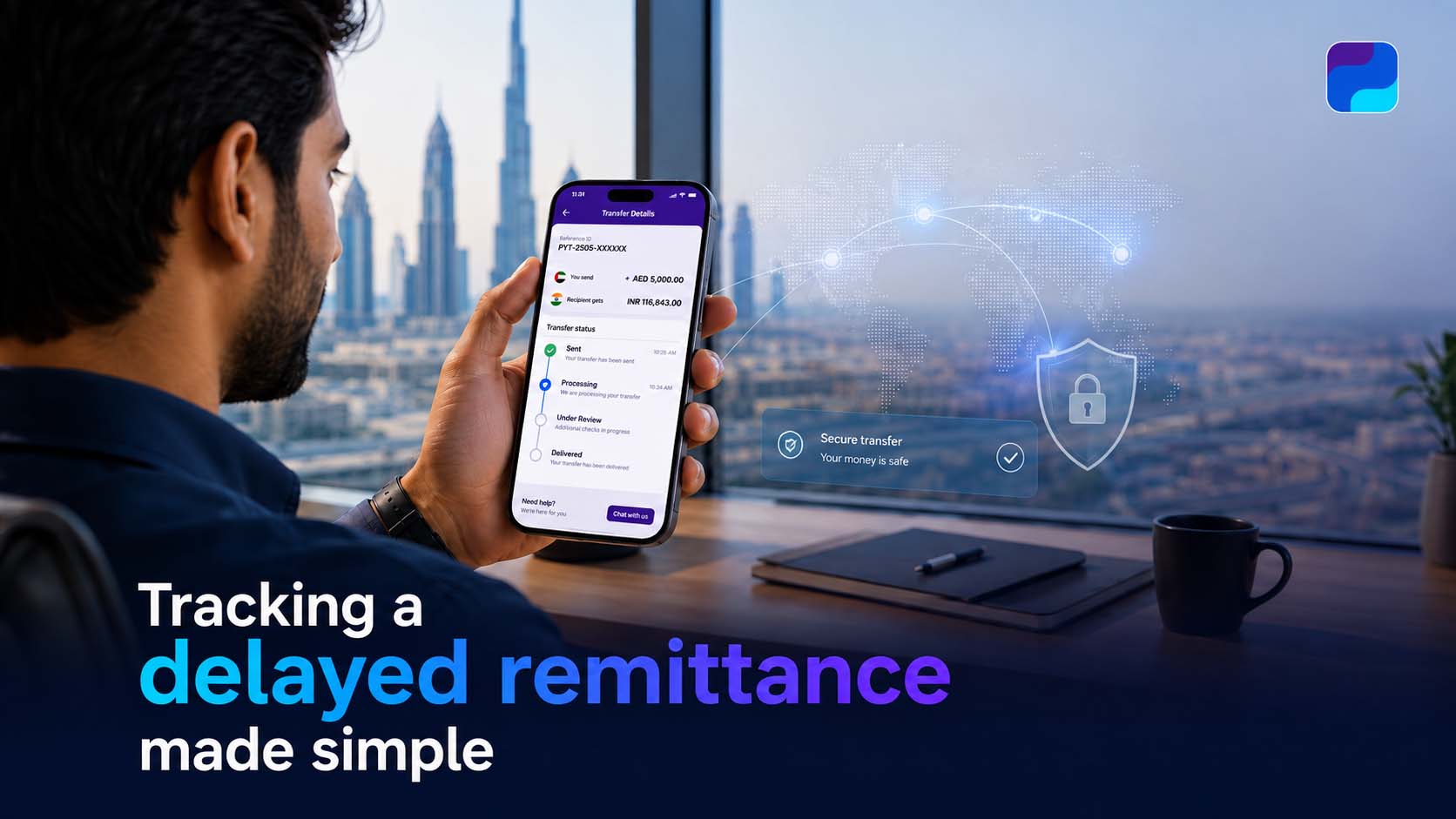
You sent money home but your loved ones say they never received it. It can be a stressful time, especially when the money is needed right away.
In many cases, a delayed transfer does not necessarily mean your money has been lost. It’s just taking longer to get to the recipient because of processing checks or banking delays.
This guide will help you to understand why a money transfer might fail or be delayed, what your transfer status means and what you can do to get the issue sorted.
When you check your transfer on the app, you may see one of the following statuses:
Processing / In progress
Your transfer request has been received and the system is moving the funds. The money is now being routed through the payment networks to the country of destination.
Completed / Successful
The transfer is done. The funds have been transferred and credited to your recipient’s bank account or digital wallet.
Cancelled / Reversed
The transfer was stopped or sent back before it could be completed. This is normally the case if there has been a bank rejection or incorrect details. If applicable, the funds may be returned to your account after the reversal process is completed by the relevant banking or payment network.
On hold / Under review
The transfer is temporarily paused. This occurs during routine compliance or security checks, meaning additional verification may be required before the transfer can proceed.
Knowing how your transfer works can help you to understand why delays sometimes happen.
Your digital wallet checks your balance, verifies your details and sends your transfer request securely.
The payment is then processed through the banking networks. Standard security and compliance checks may be performed before the money reaches the destination country.
The recipient’s bank verifies the account details before crediting the money. If a problem arises the transfer may be delayed or returned.
Most transfer delays stem from one of these common reasons.
A small mistake in the recipient’s name, account number or IBAN may prevent the transfer from being completed.
Always double-check the recipient’s information before sending money.
Security and compliance checks are performed by banks and other financial institutions to help keep customers safe and to meet their regulatory obligations.
Sometimes these verifications can take longer than expected, especially on large or unusual transactions.
Transfers can sometimes take longer if the sending or receiving country is observing a weekend or a bank holiday. Processing usually resume once banks and payment networks return to normal operating hours.
The account you are sending to might be inactive, or maybe subject to restrictions or other conditions that prevent the transfer from being completed. In such cases the receiving bank may delay the transfer or reject it.
Sometimes banks carry out system maintenance, app updates or backend upgrades. During these periods, transfers may take a little longer to process.
While your transfer is being processed, keep checking your SMS messages, app notifications and email updates. Your transfer provider may contact you with important information about your transfer, request more information from you or notify you when your transfer has been completed.
If your transfer is still showing as Pending, avoid sending another transfer immediately.
The original transfer may still be processed successfully. Sending the money again could result in duplicate payments if both transfers are completed.
Wait until the first transfer is confirmed as Failed before sending the money again.
If the recipient of your transfer has not received it, take the following actions:
Check the most recent status of your transaction by opening your app.
Make sure the details are correct by double-checking the account number, IBAN, and recipient name on your transfer receipt.
Ask your recipient to check:
Sometimes the money has already arrived, but the notification is delayed.
Get help from customer care using your transaction reference number if the transfer remains pending for longer than anticipated.
If you are using Payit, you can:
Dealing with a delayed or failed money transfer can be stressful, but knowing what steps to take is the best way to resolve the issue. Having the right tools can make it easier to track your funds and understand what went wrong.
For instance, the digital wallet Payit offers features including transaction status updates, customer support, and remittance services powered by First Abu Dhabi Bank (FAB). Ultimately, staying informed and knowing exactly who to contact allows you to navigate unexpected delays and manage cross-border payments with greater clarity.
[1] Central Bank of the UAE – Anti-Money Laundering and Combating the Financing of Terrorism Guidelines for Financial Institutions
[2] Payit Official Website
[3] Payit Terms and Conditions
[4] JPMorgan – Cross-Border Payment Challenges and Solutions
[5] Instarem – Steps to Track Your International Money Transfer
[6] World Bank – Digital Financial Services Whitepaper