
Home » Cashless Payments Knowledge Hub » How Incorrect Recipient Details Delay Your Money Transfer
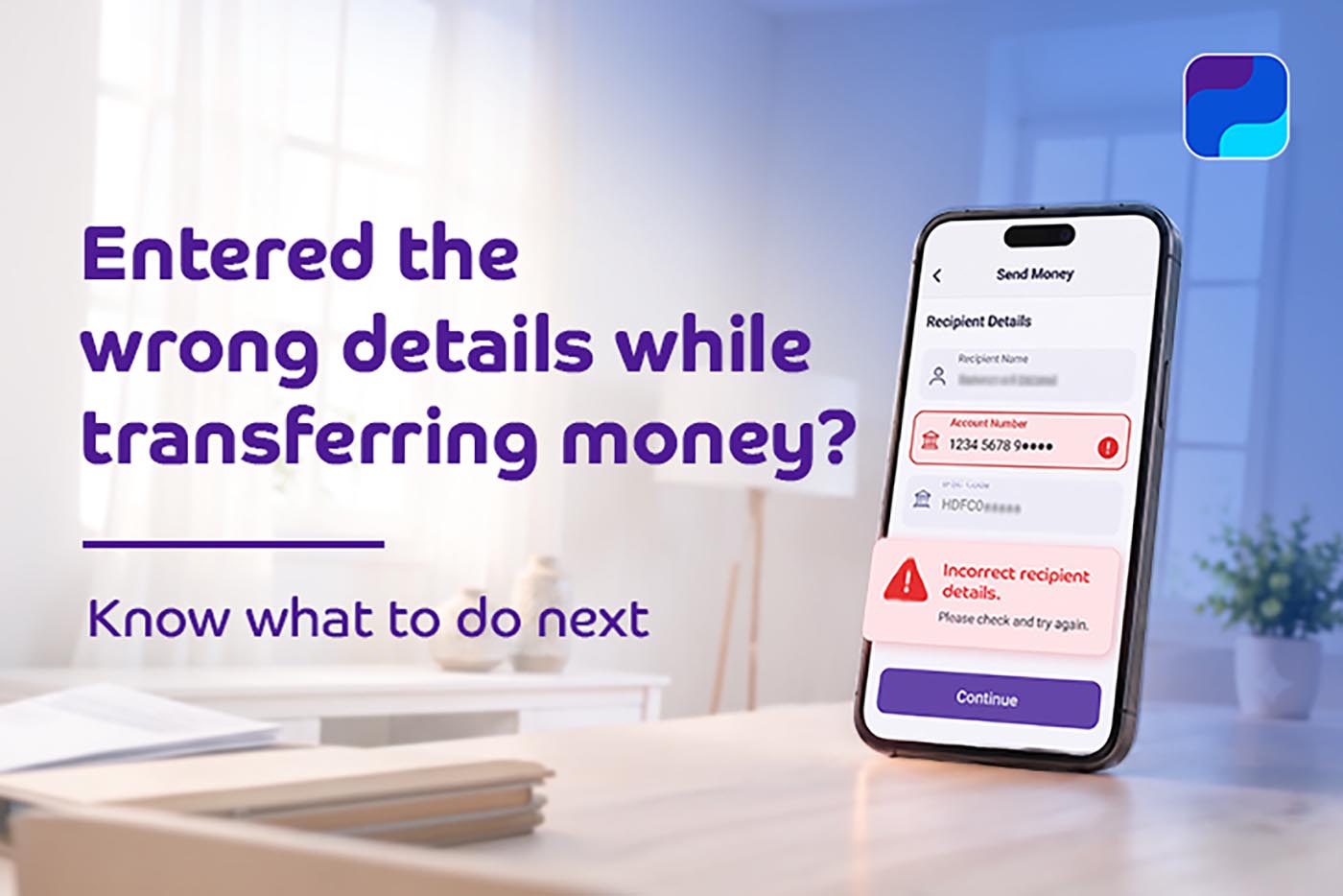
Imagine sending money to a loved one, only to find a small error in the recipient’s details has delayed the transfer.
Incorrect names, account numbers or bank codes can lead to additional checks or rejection. Always verify the details before sending to help avoid errors and delays.
Providing the right recipient details helps banks and payment providers identify where the money needs to go. If the information is incorrect or incomplete, the transfer may be delayed, require additional checks, or be rejected.
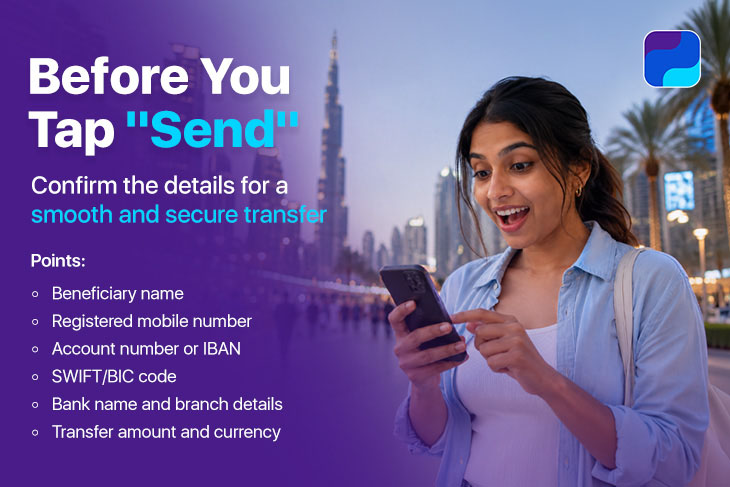
The details you need to provide depend on the transfer method and destination. For international bank transfers, you may need details such as an account number, IBAN, or SWIFT/BIC code. Eligible Payit-to- Payit transfers through Aani can use a registered mobile number. Make sure you provide the information requested for the transfer method you choose. [1]
The information you need depends on the type of transfer and the destination country. Different remittance corridors may require different beneficiary details. For example, transfers to India may require an IFSC code, while transfers to Pakistan may require an IBAN, transfers to the Philippines may require a bank or branch code; transfers to Egypt may require an account number and purpose of transfer; and transfers to Bangladesh may require a bank name, bank code and account number. . Always provide the requested details for your specific transfer, and check them carefully before confirming. [10]
If required, make sure the beneficiary’s name matches the details registered with their bank or payment provider. [1]
For transfers that use bank account details, double-check the account number or IBAN before confirming.[2]
A SWIFT/BIC code helps identify the recipient’s bank for certain international transfers. [3]
Depending on the transfer method and destination country, you may also need to provide the recipient’s bank name, branch details or other local banking information.
For eligible mobile number-based transfers, such as Payit-to-Payit transfers through Aani, the recipient’s registered mobile number is used to identify their account. Make sure the number you enter is the one linked to the recipient’s account.
Even with the correct recipient information, small entry mistakes can affect a transfer. Review the details carefully before confirming.
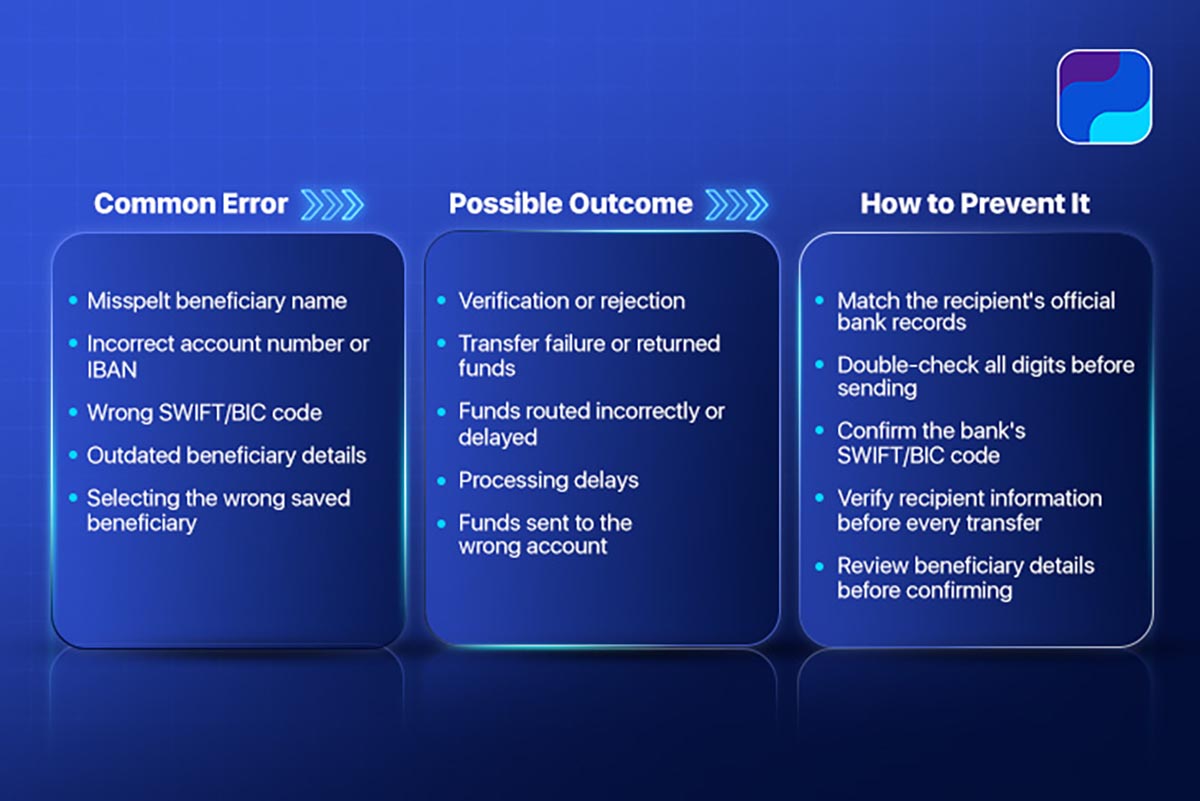
Simple typing mistakes, such as misspelt names, missing digits, or incorrect characters, can affect the accuracy of recipient information.
An IBAN or account number contains specific information used to identify a recipient’s bank account..[2]
Using an incorrect SWIFT/BIC code can affect the routing of an international payment. Since the code identifies the recipient’s bank, it is important to confirm the correct details before sending money.[3]
Recipient details can change over time. Using old details can create issues during the transfer process, so it is best to confirm the latest information before sending money.
If you have multiple saved recipients, check the beneficiary’s name and details before confirming to ensure you select the intended person.
When recipient details do not match the information required for a transfer, the payment may not be processed as expected. Depending on the type of transfer and when the error is identified, the transaction may be reviewed, delayed, rejected, or require further action to resolve.
If there is a mismatch or missing information, banks or payment providers may review the transaction before processing it.
In some cases, a transfer may be rejected if the recipient’s details cannot be verified or do not match the required information. If this happens, the payment provider or financial institution will handle the transfer according to its applicable policies.
Additional checks can extend transfer times. Processing times also vary by transfer method, destination country and institutions involved.
If money has already been processed using incorrect recipient details, resolving the issue may require an investigation. The time required will depend on the transfer stage and the institutions involved.
If your funds remain unaccounted for and the provider is unable to resolve the issue, you can escalate the matter to the Central Bank of the UAE Consumer Protection Unit through centralbank.ae. [4]
A few simple checks before confirming your transfer can help reduce the risk of errors and improve the chances of a smooth transaction.
Review all the recipient details carefully before sending money. Taking a few extra moments to verify the information can help prevent avoidable mistakes.
If you’re entering an account number or IBAN, copying and pasting the details instead of typing them manually can help reduce the risk of typing errors. Always review the information after pasting to ensure it is complete.
Where required, make sure the beneficiary’s name matches their official bank records or identification. This helps avoid issues during the verification process.
If you’re unsure about the recipient’s account number, IBAN, SWIFT/BIC code, or other required information, confirm the details with them before initiating the transfer.
If you send money to the same person regularly, saving their verified details can make future transfers more convenient while reducing the need to enter the information again.
Before tapping Send or Confirm, take one final look at all the recipient details, transfer amount, and currency. A quick review can help you spot any mistakes before the transfer is processed. A few simple checks before sending can help reduce errors and support a smooth transfer.
Incorrect recipient details are one of the reasons a transfer can be delayed, but they are not the only one. The transfer method and destination can also affect how long it takes to process. Other factors may include:
Banks and payment providers may carry out compliance and anti-money laundering (AML) checks as part of the transfer process. In some cases, these checks may affect processing times.
Transfers may take longer to process if the sending or receiving bank is closed due to a public holiday or weekend. Processing usually resumes once the banks reopen.
If a transfer involves converting one currency into another, additional processing may be required before the funds are credited to the recipient.
Even after a transfer is successfully sent, the recipient’s bank may take additional time to process and credit the funds to the beneficiary’s account.
Transfer times can also depend on the payment network being used and its operating hours. Some networks process transactions only during certain business hours, while others offer faster or near real-time payments. [7]
The right money transfer service can make international transfers more convenient and easier to manage. Look for:
Look for a provider that uses appropriate security measures to protect your personal and financial information throughout the transfer process. This may include encryption, secure authentication, transaction monitoring and clear status updates. It is also important to choose a provider that operates under the relevant financial regulations and provides clear information about how your money and personal data are handled.
Saving verified beneficiaries can reduce manual entry and errors.
Look for clear estimates of when the funds are expected to arrive.
Tracking helps you stay informed about your transfer’s progress.
Responsive support can help if you have questions or need assistance.
Clear alerts can explain transfer issues and the next steps. [8] [9]
Payit offers multiple ways to send money, depending on the type of transfer you choose. For eligible Payit-to-Payit transfers, you can send money using a registered mobile number through Aani, making it easy to transfer funds without entering extensive banking details.
For transfer types that require beneficiary information, Payit lets you review recipient details before confirming your transaction, giving you an opportunity to check the information before sending. You can also save and manage beneficiaries, making future transfers quicker and more convenient.
To give you greater visibility, Payit lets you track your transfer status in the app, so you know where your transaction stands.
Eligible users can also access Send Now, Pay Later (SNPL) for qualifying remittance transactions, giving them added flexibility when sending money to loved ones.
The slightest error in the recipient’s details could cause the money transfer to be delayed, further verification, or even failure of the entire transaction. Taking a few extra moments to review the information before confirming your transaction can go a long way toward ensuring your money reaches the intended recipient smoothly.
Whether you’re sending money using bank account details or an eligible mobile number-based transfer, always ensure you’ve entered the correct information for your chosen transfer method. By checking recipient details before every transfer, you can reduce avoidable errors and help make the transfer process smoother.
Incorrect or incomplete recipient information may trigger additional verification checks, delay processing, or, in some cases, prevent the transfer from being completed. The outcome depends on the transfer method, payment provider, and the stage of the transaction.
Saving verified beneficiary details can help reduce the risk of manual entry errors and make future transfers more convenient. It’s still a good idea to review the saved information before confirming each transfer.
If you notice an error after sending money, contact your payment provider as soon as possible. Whether changes can be made depends on the transfer status, the provider’s policies, and whether the payment has already been processed.
Transfer times can vary depending on several factors, including recipient information, compliance checks, bank holidays, currency conversion, recipient bank processing times, and the payment network used.
The possibility of cancelling a transfer depends on how far along the transaction is. Contact your payment provider immediately to understand the options available for your transfer.
If the transfer was processed using an incorrect IBAN, contact your payment provider immediately and check if a recall request is possible.
[1] Using past data to predict future errors | Swift
[2] International Bank Account Number (IBAN) | Swift
[4] CBUAE Rulebook – Requirements for Beneficiary Licensed Persons
[5] CBUAE Consumer Protection Standards – Remittance Transactions
[6] CBUAE Rulebook – Article 28: International Wire Transfers
[7] Emirates NBD – Help with Transfers and Payments
[8] CBUAE Consumer Protection Standards
[9] CBUAE Rulebook – Record Keeping Related to Remittances
[10]https://www.westernunion.com/us/en/bank-account-transfer-details.html?