
Home » Cashless Payments Knowledge Hub » Why cashless salary payments are better for domestic workers in the UAE
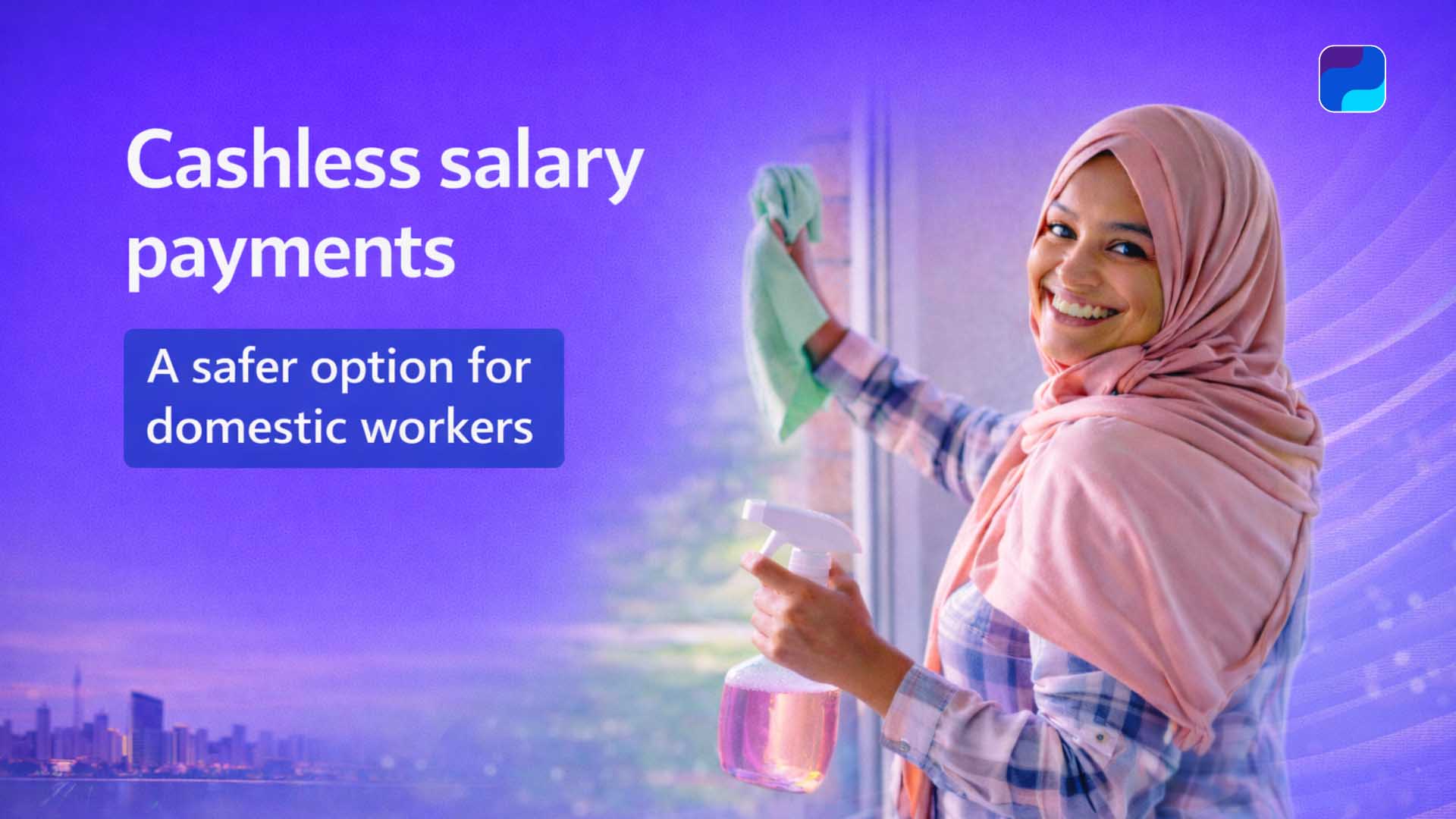
Domestic workers play an important role in households across the UAE [1]. They help families by caring for children, supporting senior members, and handling other duties that ensure homes run smoothly [1]. The most significant problem they faced was that salary payments were made in cash, which was prone to uncertainty and risk [2]. Cash payments may be delayed or lost, creating unnecessary stress for both employers and employees [2]. As the UAE continues to modernise its financial systems, cashless salary payments have been increasingly promoted as a safer and more reliable alternative that benefits everyone involved [3].
The UAE has established clear systems that enable domestic workers to receive their wages electronically via approved banks, exchange houses, and digital platforms [4]. These systems are designed to support timely payments and clear documentation [4]. They operate within a regulatory framework, and their true value is evident in their day-to-day work. Digital salary payments bring clarity to financial arrangements and help build trust within domestic employment relationships [5].
UAE labour regulations set clear expectations around when domestic workers must be paid and how salaries should be delivered through recognised channels [6]. To make the process more reliable and transparent, authorities have encouraged employers to move toward electronic salary payments, which helps ensure wages are paid on time and recorded accurately [6]. Certain categories of domestic workers are already covered by mandatory electronic wage systems, while others are strongly encouraged to adopt digital methods as part of broader financial reforms [7].
The intent of these regulations extends beyond compliance. The objective is to ensure that salaries are paid securely and consistently, reducing disputes and misunderstandings [7]. While the law establishes the structure, the benefits are experienced most clearly in daily life. Employers gain clarity, and workers receive assurance that their wages are handled responsibly [6].
For employers, cashless salary payment systems make it easier to manage salaries [8]. The process of withdrawing cash each month and tracking payments is eliminated. Salaries can be sent electronically via the approved platforms within a short period [8]. Payments are automatically recorded, and the employer can view the payment history at any time.
This helps in improved financial organisation within the household [9]. The employer can manage expenses more effectively, as they know when salaries are paid and the amounts involved [9].
Cashless transactions also help to eliminate misunderstandings between employers and domestic workers [10]. For instance, if the payment is done in cash, there may be misunderstandings concerning the dates or amounts. The digital system creates evidence of payment, enabling both parties to confirm the transaction with certainty [10].
There is also a distinct safety aspect. There are risks associated with handling physical money, for example, loss or theft [11]. Digital payments eliminate these risks and ensure that salaries are transferred securely from the employer to the employee [11]. This benefits the employer, as it ensures the safe transfer of salaries to employees each month [11].
Digital access gives domestic workers the flexibility to handle their salaries [13]. They can withdraw their salaries from ATMs, use them to pay for daily expenses, or send money to their families without using cash. This gives domestic workers the freedom to handle their finances with dignity and confidence [13].
In the long run, accurate payment records help domestic employees plan more effectively [15]. With advance notice of salary payments, they can better budget and plan their expenditures. This helps them achieve financial stability and reduces stress, especially for those with families abroad [15].
Cashless salary payments often serve as a gateway to basic financial services for domestic workers [16]. Many receive prepaid cards, IBANs, or digital wallets that can be used for shopping, bill payments, and remittances. These tools allow workers to participate more fully in the UAE’s digital economy [16].
Access to such services reduces reliance on cash-based transactions and informal channels [17]. Workers gain greater control over how they store, access, and transfer their earnings. Over time, this inclusion supports better financial habits and stronger financial independence [17].
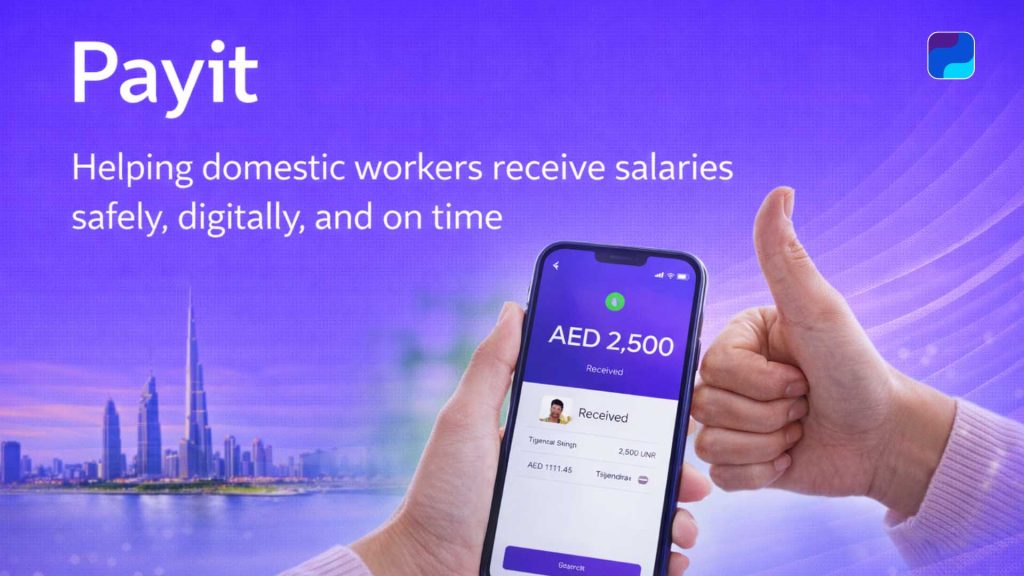
In this ecosystem, Payit plays a meaningful role by offering solutions designed to enable safe, simple salary payments. With the Payit Card, Debit Card, or Digital Wallet, employers can instantly and securely transfer domestic workers’ salaries without cash handling or complex processes. Payments are recorded automatically, giving employers clear visibility and reducing the risk of disputes.
For domestic workers, Payit provides immediate access to their earnings in a secure digital format. Salaries can be tracked easily, withdrawn when needed, or used directly for everyday purchases and remittances. This ease of access helps workers manage their finances with confidence while ensuring their wages remain protected. By combining speed, transparency, and accessibility, Payit supports a smoother payroll experience that aligns with the UAE’s move toward safer, cashless salary payments.
Regular and transparent salary payments lead to healthier work relationships [18]. The employer demonstrates accountability by making timely digital payments, and the domestic worker is reassured that their labour is appreciated and compensated accordingly. Transparency leads to mutual respect and trust in the long run [18].
When payment systems are efficient and predictable, both parties can focus on their duties without worrying about finances [19]. The employer will have fewer concerns about handling payroll issues, and the domestic worker will not have to worry about finances. This fosters a professional and respectful domestic work environment [19].
The UAE is known for a highly developed digital infrastructure and widespread use of electronic payment systems [20]. Mobile banking, online wallets, and contactless payments are common practices. The extension of these services to domestic workers’ salaries indicates that financial transactions are already being conducted in the country [20].
Cashless payment systems enable employers to make payments quickly and employees to access their money instantly [21]. This convenience aligns with how households conduct financial transactions and with the UAE’s shift towards digital convenience and financial inclusion [21].
The benefits of cashless salary payments are very clear and significant for domestic workers and employers in the UAE [22]. They provide increased security, clarity, and ease of financial management. Although the regulations are the foundation, the real difference is in the convenience and peace of mind [22].
With the UAE’s continued development of its digital economy, cashless salary payments are a practical, human-centred way to manage domestic workers [23].